
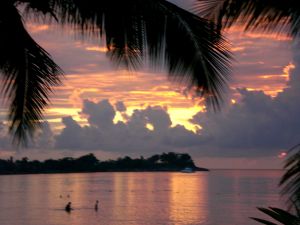
 Many travelers and retirees consider Jamaica to be the Caribbean’s most unique destination. Although it is located in the center of the Caribbean Sea, it offers a little taste of Africa in the Americas. In fact, unlike some of the other Caribbean islands, Jamaica really embraces its culture and heritage.
Blue Mountains and great beaches
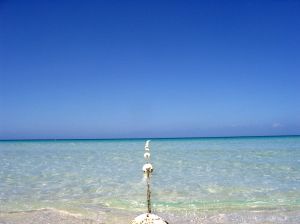
Jamaica offers powdery, soft white sands and incredibly blue waters. In fact, it has some of the best reef diving in the world. The country also has limestone caves for exploring, hiking in the famous Blue Mountains, stunning waterfalls or the opportunity and many beautiful beaches for sunning and relaxing.
Jamaica’s climate is considered to be tropical – that is hot and humid. However, its interior is more on the temperate side. The nation’s population as of 2009 was estimated to be 2,825,000. Its language is English or English patois.
The country’s capital is Kingston. Jamaica is a constitutional parliamentary democracy and a member of the British Commonwealth.
Cost of Living in Kingston, Jamaica
The cost of living for retirees in Kingston is roughly comparable to that of living in Puerto Rico. For example, a 3-course meal for two at a mid-range restaurant will cost about $46. A liter of milk sells for around $2.70, a loaf of fresh white bread $2.07, and a mid-range bottle of wine is around $20. You can buy a monthly bus pass for $20 or a one-way ticket for $1.25. Gasoline costs a reasonable $1.07 per liter and basic utilities – electricity, gas, water and garbage – $135.
You can go to the movies in Kingston for about $8.74 or join a fitness club for $57 a month.
A one-bedroom apartment in Kingston’s City Center will cost $1225 a month or $550 a month outside the City Center. A three-bedroom apartment in City Center runs about $1500 and a three-bedroom outside of the Center costs roughly $1860. Alternately, you could buy an apartment in Kingston’s City Center at a price of $1470 per square meter or outside of City Center for $833 per square meter.
Limited healthcare
Jamaica offers medical care that is more limited than what’s available in the US. Only Kingston and Montego Bay have emergency medical services. However, there are smaller public hospitals in each parish. The outlying parishes have only limited emergency medical and ambulance services and a narrow supply of prescription drugs.
If you have a serious medical problem requiring hospitalization or medical evacuation to the US, it can cost thousands of. It’s also important to know that doctors and hospitals in Jamaica often require cash payment before they will provide services.
If you have medical insurance, you cannot assume this will go with you if you retire to Jamaica. You will need to ask your insurance company if your policy will continue to apply when out of the US and if it will cover emergencies such as a trip to a Jamaican hospital or medical evacuation.
An amazing array of recreational activities
In addition to its beautiful sun-washed beaches, Jamaica offers retirees a number of other things to do and experience. It’s Blue Mountains – which are home to the world-famous Blue Mountain Coffee – offer wild trekking and hiking adventures. There are also zip lines and jungle river tubing, horseback riding, golf, kayaking and a dolphin encounter. Jamaica also boasts catamaran cruises, camel rides and 4 x 4 off-road safaris. Alternately, you could take the 4 x 4 Bob Marley Jeep Safari or an ATV Safari. There are also canopy tours, mountain tours and YS Falls, which is one of the gems of Jamaica’s south coast.
In fact, there is so much to do in Jamaica that you could probably do something different every week for a year without ever doing the same thing twice.
Jamaica gangs and drug crimes may be an issue
One issue that may concern you is the crime rate including murder rate in Jamaica due to gangs and drug related crimes. The downside of this is that Jamaica has had the world’s third highest murder rate in the past decade.
Most of the crime occurs in Spanish Town which is west of Kingston, St. James and Montego Bay. Police are working on controlling the gang wars to bring down the crime rate and make it safer to live in Jamaica.
Currently there are no travel warnings for Jamaica (Feb 2012)
Live an adventurous life
 Life in Jamaica is a bit different than in the US. However, if you like fun and adventure, a cost of living that’s a relative bargain compared to the United States and, of course, great coffee, this country might be the perfect choice for your retirement.
As you can begin to imagine there is much to enjoy when you travel and live in Jamaica. You can plan a weekend trip to get a feel for the people and lifestyle and see if it is something that excites you.
Learn more about how a baby boomer can travel, live and possibly retire in Jamaica:
http://wikitravel.org/en/Jamaica
http://travel.state.gov/travel/cis_pa_tw/cis/cis_1147.html
http://www.lonelyplanet.com/jamaica
https://www.cia.gov/library/publications/the-world-factbook/geos/jm.html