
Retiring In Uruguay In 2026: Is It Still A Good Choice?

Updated for 2026: This Uruguay retirement guide has been reviewed and updated with current cost-of-living considerations, healthcare planning notes, visa and residency cautions, safety research steps, and practical location guidance for retirees considering Uruguay.
Uruguay remains a serious retirement option for people who want a stable South American lifestyle, temperate seasons, good urban services, beaches, and a more understated culture than many larger expat destinations. The country can offer a rewarding lifestyle for retirees who choose the right location, understand the residency process, and build a realistic budget before moving.
However, retiring in Uruguay in 2026 should not be treated as a simple low-cost escape. Housing costs, private healthcare, insurance, climate, infrastructure, taxes, and visa documentation can vary widely by city and lifestyle. The safest approach is to visit more than once, compare neighborhoods in person, and verify immigration and healthcare details before committing.
Quick 2026 Snapshot
- Best for: Retirees who want political stability, a European-influenced culture, Atlantic beaches, reliable infrastructure, and a calmer pace in South America.
- Estimated monthly budget: About $2,200 to $4,000 per month for many singles or couples, with Montevideo and Punta del Este generally costing more than smaller towns.
- Top retirement areas: Montevideo, Punta del Este, Piriápolis, Colonia del Sacramento, Atlántida and the Costa de Oro, and Salto.
- Main advantages: Stable institutions, good infrastructure, attractive coastal towns, temperate weather, and strong day-to-day livability.
- Main cautions: Uruguay is not the cheapest Latin American destination, winters can feel damp, and Spanish is important outside tourist areas.
- Healthcare note: Montevideo has the strongest healthcare network; retirees should compare private plans and mutualista-style coverage carefully.
Why Retire To Uruguay?
Uruguay appeals to retirees who want South America without the intensity of a very large country. It is known for a slower pace, a long Atlantic coastline, good roads, reliable utilities in major areas, and a social culture that often feels more relaxed than fast-growing expat hotspots.
The country is especially attractive for retirees who value stability. Montevideo offers museums, restaurants, healthcare, shopping, and city services, while nearby beach communities provide a quieter coastal lifestyle. For many retirees, that combination is more important than finding the absolute lowest possible cost of living.
Uruguay is also a good fit for people who want four seasons rather than year-round tropical heat. Summers can be warm and beach-oriented, while winters are cooler and quieter. That seasonal rhythm gives Uruguay a different feel from Panama, Costa Rica, Belize, or the Caribbean.
Cost Of Living In Uruguay In 2026
Uruguay can be good value compared with expensive U.S. coastal cities, but retirees should not expect bargain-basement prices. Groceries, imported goods, cars, fuel, restaurant meals, and beachfront housing can be expensive, especially around Montevideo and Punta del Este.
- Budget lifestyle: About $1,800 to $2,500 per month may work for a single person or frugal couple in a smaller city or modest rental situation.
- Comfortable lifestyle: About $2,500 to $4,000 per month is a more realistic planning range for many retirees who want a comfortable apartment, regular dining out, private healthcare, and local travel.
- Higher-end lifestyle: $4,500 or more per month may be needed for premium neighborhoods, Punta del Este lifestyle expectations, frequent travel, or a larger coastal property.
Before moving, build a monthly budget that includes rent, utilities, internet, mobile phone service, groceries, restaurants, transportation, private health insurance or self-pay medical care, travel back home, immigration renewals, and an emergency reserve. Imported products, beachfront housing, air conditioning, private insurance, and frequent travel can raise costs quickly.
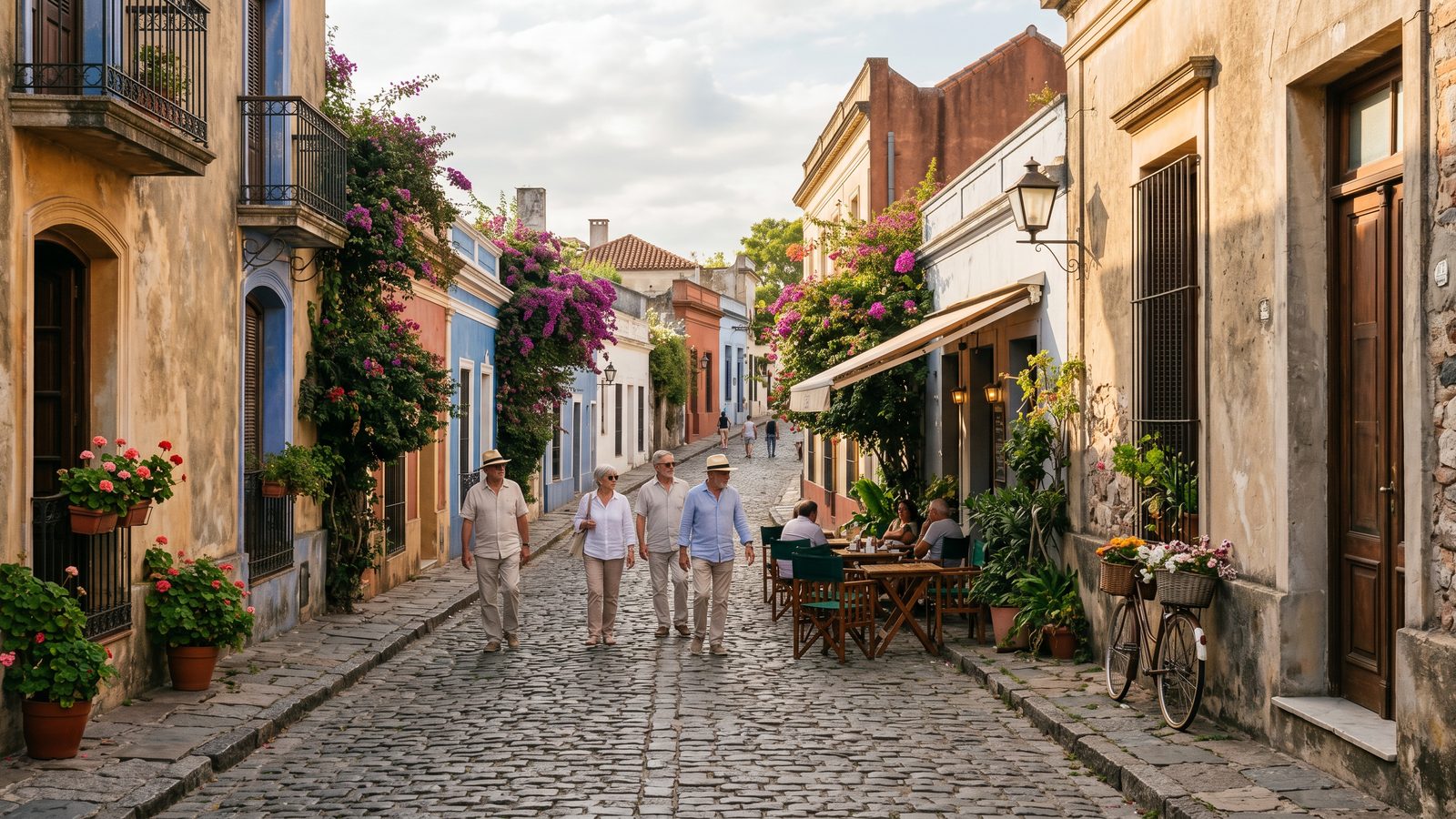
Best Places To Retire In Uruguay
The best place to retire in Uruguay depends on whether you want city conveniences, beach living, historic charm, or a quieter inland routine.
- Montevideo: The capital offers the best mix of healthcare, shopping, cultural life, restaurants, coastal walking areas, and international connections.
- Punta del Este: Uruguay’s best-known beach resort area, appealing for upscale coastal living but more expensive and highly seasonal.
- Piriápolis: A smaller beach city that can feel more relaxed than Punta del Este while still offering coastal scenery and services.
- Colonia del Sacramento: A historic riverside town with colonial charm, ferry access to Buenos Aires, and a slower pace.
- Atlántida and the Costa de Oro: Coastal communities east of Montevideo that may appeal to retirees who want beach access without living in the capital.
- Salto: An inland city known for thermal springs and a lower-key lifestyle, though healthcare and international amenities are more limited than in Montevideo.
Healthcare And Insurance
Healthcare in Uruguay is strongest in Montevideo, where retirees will find the broadest selection of hospitals, specialists, private clinics, and diagnostic services. Smaller towns may be fine for routine care, but retirees with chronic conditions should think carefully about distance to major facilities.
Many foreign residents use private plans or mutualista-style medical memberships. Costs and access rules can depend on age, health history, coverage level, and provider network, so retirees should compare options before choosing a city.
U.S. retirees should also remember that Medicare generally does not cover healthcare outside the United States, except in limited circumstances. Many retirees keep Medicare active for care back home while arranging private insurance, local coverage, or a self-pay strategy abroad.

Visa And Residency Options
Uruguay has long been seen as relatively welcoming to foreign residents, but retirees should still verify current residency requirements with an Uruguayan consulate or immigration professional. Documentation, background checks, financial proof, and apostilled records can take time.
Many retirees first visit for an extended stay, then begin the residence process after deciding Uruguay fits their lifestyle. Do not assume that older online descriptions of the process are complete or current.
- Temporary or permanent residence: Retirees may be able to pursue residence by showing financial means and required documentation.
- Document preparation: Birth certificates, marriage records, police records, and financial documents may need official formatting and translation.
- Professional guidance: A local immigration attorney or relocation advisor can be useful because requirements and processing practices can change.
Safety, Climate, And Practical Considerations
Uruguay is often viewed as one of the calmer retirement choices in Latin America, but retirees should still research neighborhood safety, petty theft, nighttime transportation, and property security. City life in Montevideo requires the same practical awareness you would use in any capital.
The U.S. Department of State travel advisory is a useful starting point for U.S. citizens because it summarizes destination-specific risks and precautions. It should not be the only source you use, but it is important background research before choosing where to live.
- Climate: Uruguay has four seasons, warm summers, cool winters, coastal wind, and less tropical humidity than Central America or the Caribbean.
- Language: Spanish is the daily language. English may be found in some tourist or professional settings, but learning Spanish is important for healthcare, rentals, government offices, and daily errands.
- Transportation: Montevideo has buses and taxis, while smaller towns may require a car for convenience. Coastal areas can be seasonal, so transportation options may change outside summer.
- Banking and taxes: Retirees should get professional advice before moving, especially if they have pensions, investments, rental income, real estate, or tax obligations in more than one country.
Pros And Cons Of Retiring In Uruguay
- Pro: Uruguay offers stability, good infrastructure, and a calm social environment.
- Pro: Montevideo provides strong healthcare and city amenities by regional standards.
- Pro: Coastal towns offer attractive beach living without a tropical climate.
- Pro: The country can suit retirees who want a quieter, less hyped expat destination.
- Con: Uruguay is more expensive than many retirees expect.
- Con: Spanish is important for integration and practical problem-solving.
- Con: Winter can be cool, damp, and less appealing for retirees seeking constant warmth.
- Con: Specialized healthcare access is strongest in Montevideo rather than in small towns.
Who Should Consider Uruguay?
Uruguay is best for retirees who value stability, coastal scenery, good infrastructure, and a measured pace over the lowest possible cost of living. It is especially appealing for people who want South America, but prefer a less chaotic environment than some larger countries can offer.
Uruguay may not be ideal for retirees who want year-round tropical heat, very low living costs, a large English-speaking expat scene, or inexpensive imported goods.
Frequently Asked Questions About Retiring In Uruguay
How much money do you need to retire in Uruguay in 2026?
Many retirees should plan on roughly $2,200 to $4,000 per month, depending on rent, healthcare, location, and lifestyle. Smaller towns may cost less, while Montevideo and Punta del Este can cost significantly more.
Can Americans retire in Uruguay?
Yes. Americans can retire in Uruguay, but long-term residence requires verifying current immigration rules, preparing documents, and showing that you can support yourself.
Is healthcare good in Uruguay?
Healthcare can be good, especially in Montevideo. Retirees with significant medical needs should live near major hospitals and compare private coverage options before moving.
Is Uruguay safe for retirees?
Uruguay is generally considered one of the region’s more stable choices, but retirees should still research neighborhoods, petty crime, transportation, and property security before choosing where to live.
What are the best places to live in Uruguay as a retiree?
Montevideo, Punta del Este, Piriápolis, Colonia del Sacramento, Atlántida, the Costa de Oro, and Salto are common starting points for retirement research.
Final Thoughts
Uruguay is not the cheapest retirement destination in Latin America, but it can be one of the most livable for retirees who prioritize stability, coastal access, infrastructure, and a moderate climate.
For retirees who visit in different seasons, compare real rents, verify healthcare access, and prepare for Spanish-language daily life, Uruguay can still be a strong retirement choice in 2026.