
Retiring In Costa Rica In 2026: Is It Still A Good Choice?

Updated for 2026: This Costa Rica retirement guide has been reviewed and updated with current cost-of-living considerations, healthcare planning notes, visa and residency cautions, safety research steps, and practical location guidance for retirees considering Costa Rica.
Costa Rica remains a serious retirement option for people who want natural beauty, political stability, biodiversity, established expat communities, good healthcare access in the Central Valley, and a relaxed Pura Vida lifestyle. The country can offer a rewarding lifestyle for retirees who choose the right location, understand the residency process, and build a realistic budget before moving.
However, retiring in Costa Rica in 2026 should not be treated as a simple low-cost escape. Housing costs, private healthcare, insurance, climate, infrastructure, taxes, and visa documentation can vary widely by city and lifestyle. The safest approach is to visit more than once, compare neighborhoods in person, and verify immigration and healthcare details before committing.
Quick 2026 Snapshot
- Best for: Retirees who want nature, stability, warm weather, established expat communities, and access to healthcare without moving too far from North America.
- Estimated monthly budget: About $2,000 to $4,500 per month for many retirees, with beach towns and premium Central Valley communities costing more.
- Top retirement areas: Atenas, Grecia, Escazú, Santa Ana, San José suburbs, Tamarindo, Playas del Coco, Jacó, Uvita, and the Southern Zone.
- Main advantages: Nature, stability, healthcare access, expat networks, flights to North America, and multiple climate zones.
- Main cautions: Costa Rica is no longer a cheap destination, beach humidity can be intense, infrastructure varies, and residency and CAJA costs require planning.
- Healthcare note: The Central Valley has the best access to hospitals and specialists; remote beach areas may be less practical for serious medical needs.
Why Retire To Costa Rica?
Costa Rica remains one of the classic retirement-abroad destinations because it offers a rare mix of stability, nature, healthcare, and accessibility. Retirees can choose mountain towns, Central Valley suburbs, beach communities, or rainforest-adjacent villages while staying within a relatively short flight of the United States.
The appeal goes beyond beaches. Many retirees are drawn to Costa Rica for biodiversity, outdoor living, fresh food, friendly communities, and the slower Pura Vida mindset. The country also has a long history of foreign residents, which can make relocation easier than in a place with little expat infrastructure.
The important 2026 update is cost. Costa Rica can still be good value for the right retiree, but it is not the low-cost secret it once was. Popular beach towns, imported goods, private insurance, vehicles, and comfortable rentals can be expensive.
Cost Of Living In Costa Rica In 2026
Costa Rica’s cost of living depends strongly on location. Central Valley towns can be practical for healthcare and daily services, while popular beach areas often cost more because of tourism demand, transportation, air conditioning, and limited housing supply.
- Budget lifestyle: About $1,700 to $2,300 per month may work for a frugal single retiree or modest couple outside the most expensive areas.
- Comfortable lifestyle: About $2,500 to $4,500 per month is a more realistic range for many retirees who want a comfortable rental, restaurants, a car or regular transport, private care, CAJA costs, and travel.
- Higher-end lifestyle: $5,000 or more per month may be needed for premium beach property, upscale Escazú or Santa Ana living, frequent flights, imported goods, or luxury services.
Before moving, build a monthly budget that includes rent, utilities, internet, mobile phone service, groceries, restaurants, transportation, private health insurance or self-pay medical care, travel back home, immigration renewals, and an emergency reserve. Imported products, beachfront housing, air conditioning, private insurance, and frequent travel can raise costs quickly.
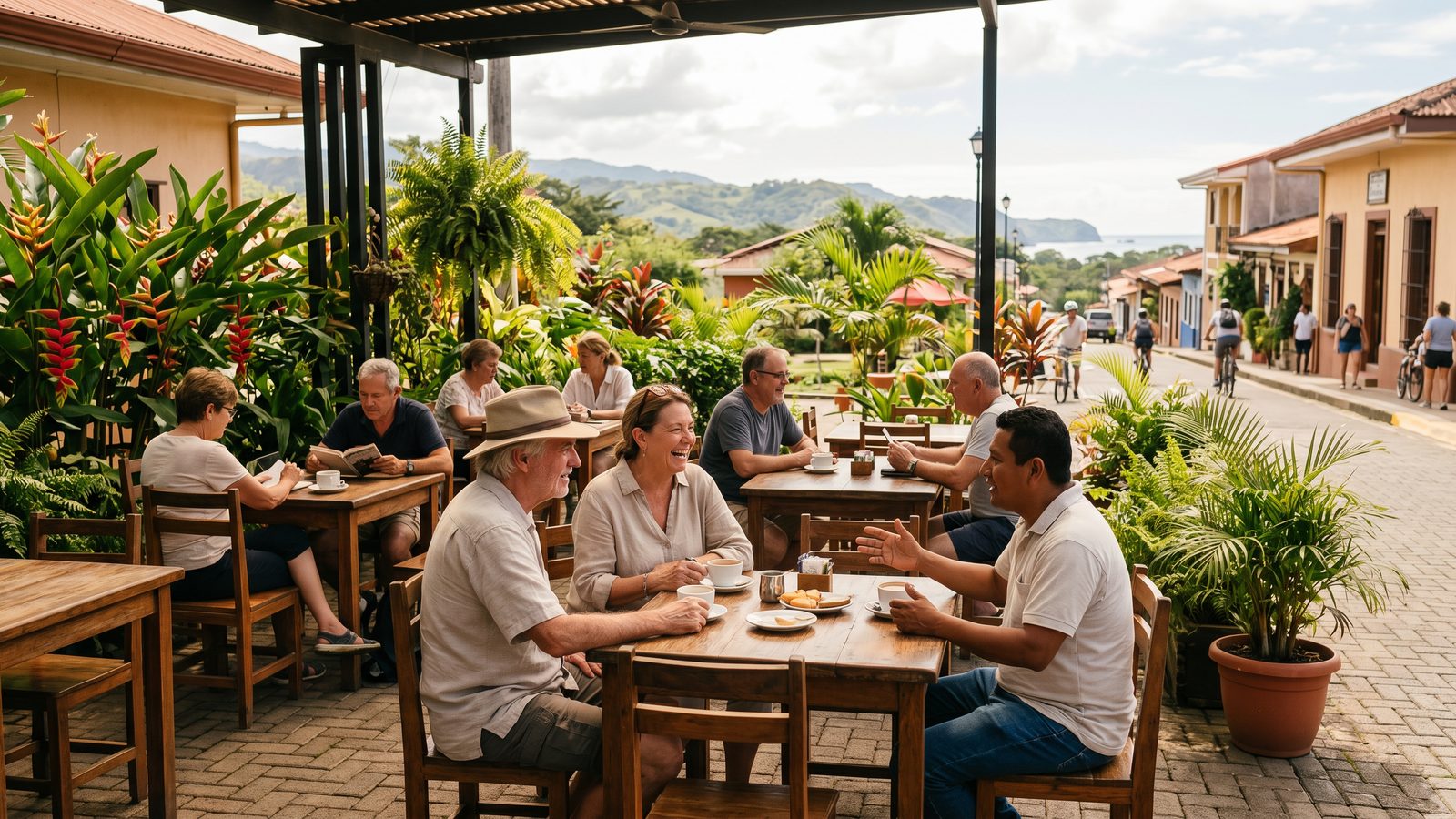
Best Places To Retire In Costa Rica
Costa Rica’s best retirement locations differ by climate, healthcare access, cost, and lifestyle. Many retirees start in the Central Valley because services are easier there.
- Atenas: A popular Central Valley town known for mild weather, views, and a quieter pace within reach of San José services.
- Grecia: A practical town with a local feel, lower-key expat presence, and access to Central Valley amenities.
- Escazú and Santa Ana: Upscale San José suburbs with shopping, restaurants, hospitals, international schools, and higher costs.
- Tamarindo: A well-known beach town with restaurants, tourism services, surfing, and an international community.
- Playas del Coco: A Guanacaste beach area with expats, services, and access to Liberia airport.
- Uvita and the Southern Zone: Lush coastal areas appealing to nature lovers, though healthcare distance and road conditions should be considered.
Healthcare And Insurance
Costa Rica has public and private healthcare options, with the strongest concentration of hospitals and specialists in the Central Valley around San José. Many retirees use a combination of public system access and private care.
Residents may be required to contribute to the public healthcare system, commonly known as CAJA, depending on residency category and rules. Retirees should understand monthly costs, enrollment, private insurance options, wait times, and proximity to hospitals before choosing a town.
U.S. retirees should also remember that Medicare generally does not cover healthcare outside the United States, except in limited circumstances. Many retirees keep Medicare active for care back home while arranging private insurance, local coverage, or a self-pay strategy abroad.

Visa And Residency Options
Costa Rica has residency categories that may suit retirees, including pensionado-style options, but current income thresholds, documentation rules, insurance or CAJA obligations, and processing details should be verified before applying.
Retirees should prepare for document collection, apostilles, translations, background checks, and renewals. The process can be manageable but should not be left until the last minute.
- Pensionado-style residence: Often relevant for retirees with documented pension or Social Security income, subject to current rules.
- Rentista and other categories: May apply to people with savings or non-pension income, depending on current requirements.
- CAJA and renewals: Healthcare enrollment, monthly contributions, and renewal documentation should be part of the budget.
Safety, Climate, And Practical Considerations
Costa Rica is comfortable for many retirees, but petty theft, home security, beach-town crime, road conditions, floods, and landslides require practical awareness. Retirees should research specific towns and neighborhoods rather than relying on the country’s general reputation.
The U.S. Department of State travel advisory is a useful starting point for U.S. citizens because it summarizes destination-specific risks and precautions. It should not be the only source you use, but it is important background research before choosing where to live.
- Climate: Costa Rica has many microclimates, including mild Central Valley weather, hot and dry Guanacaste beaches, humid Caribbean areas, and rainy Southern Zone forests.
- Language: Spanish is important for integration, healthcare, rentals, and government offices, though English is common in some expat and tourism areas.
- Transportation: A car can be useful outside walkable towns, but road conditions, traffic, mountain driving, and rainy-season travel should be considered.
- Banking and taxes: Retirees should get professional advice before moving, especially if they have pensions, investments, rental income, real estate, or tax obligations in more than one country.
Pros And Cons Of Retiring In Costa Rica
- Pro: Costa Rica offers nature, stability, and established retirement infrastructure.
- Pro: Healthcare access is strong in and around the Central Valley.
- Pro: There are many expat communities and relocation services.
- Pro: Multiple climates allow retirees to choose mountains, valleys, or beaches.
- Con: Costa Rica is more expensive than many older articles suggest.
- Con: Beach areas can be hot, humid, and costly.
- Con: Infrastructure and roads vary outside major areas.
- Con: Residency, CAJA, and insurance costs require careful budgeting.
Who Should Consider Costa Rica?
Costa Rica is best for retirees who want nature, stability, warm weather, and a proven retirement destination with enough infrastructure to make relocation manageable.
It may not be ideal for retirees who want the lowest possible cost of living, dislike humidity and rain, need urban healthcare while living on a remote beach, or expect every service to work like it does at home.
Frequently Asked Questions About Retiring In Costa Rica
How much money do you need to retire in Costa Rica in 2026?
Many retirees should plan on roughly $2,000 to $4,500 per month, depending on rent, location, healthcare, transportation, and how often they buy imported goods or travel.
Can Americans retire in Costa Rica?
Yes. Americans can retire in Costa Rica, but long-term living usually requires qualifying for a residency category and meeting current documentation and income requirements.
Is healthcare good in Costa Rica?
Healthcare can be good, especially in the Central Valley. Retirees should understand CAJA, private insurance, hospital access, and wait times before choosing where to live.
Is Costa Rica safe for retirees?
Costa Rica is popular with retirees, but safety varies locally. Research property security, petty theft, road conditions, and weather risks by town and neighborhood.
What are the best places to live in Costa Rica as a retiree?
Atenas, Grecia, Escazú, Santa Ana, San José suburbs, Tamarindo, Playas del Coco, Jacó, Uvita, and the Southern Zone are common areas to compare.
Final Thoughts
Costa Rica remains one of the most practical overseas retirement choices for people who value nature, stability, and established expat infrastructure.
The best retirees update their expectations: Costa Rica can be wonderful, but it is not automatically cheap, and the right location should be chosen around healthcare, climate, budget, and daily convenience.